
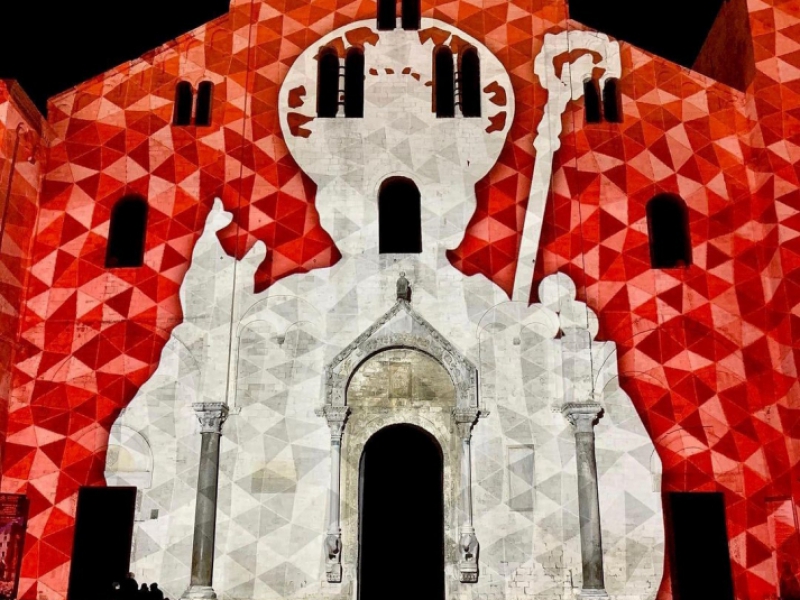
Tradition has it that on 6 December, from Bari to Lecco, San Nicola brings apples to adults and children. Have you ever wondered where this tradition comes from and why St. Nicholas bears precisely these fruits (which are not fruits)?
San Nicola, or as it is called in many Italian cities, San Nicolò, was called Nicola di Mira, was born between 260 and 280 AD. in Patara (Turkey) by a rich local family. His parents died of the plague and Nicola inherited a rich heritage, which he used to help the needy. It is said that he gave food and money to the poor, lowering it secretly through the fireplace or from the windows of their houses.
The legend still tells that Nicola decided to donate to the family of a decayed nobleman with three daughters to keep a large amount of money divided into three parts: after having wrapped each of these three sums in a cloth, he threw them into the man's house in three consecutive nights. Later, Nicola became bishop of Mira, where his miracles became famous: according to a legend, in fact, Nicola resurrected three children.
For these legends, St. Nicholas became the protector of children and the patron saint of some cities like Bari. What then binds the Saint to apples? It seems that St. Nicholas gave three beautiful apples to three children who were so poor that they could not buy even a little food. During the night, however, the three fruits turned into very precious golden apples which, once sold, helped the children's family to survive.
That's why on December 6, in many Italian cities, ripe and shiny apples are given to children. Moreover, in some countries, Santa Claus is called Santa Klaus because Santa Claus would be Saint Nicholas. The traditions of Northern Europe, in fact, modeled on the figure of the Saint, known protector of children, the myth of an old man who goes around the houses of the world one night a year giving sweets and toys to the little ones. Hence the link between the Saint and the father most loved by children.
In the year 305 Nicholas was imprisoned and exiled by the Emperor Diocletian, who in 303 had started a series of persecutions against Christians. In 313, he was freed by Constantine and resumed his apostolic activity. He died in Mira in 343, but it is said that he continued to perform miracles. His remains are now preserved in Bari. (Photo by F.R. Morisco)

